
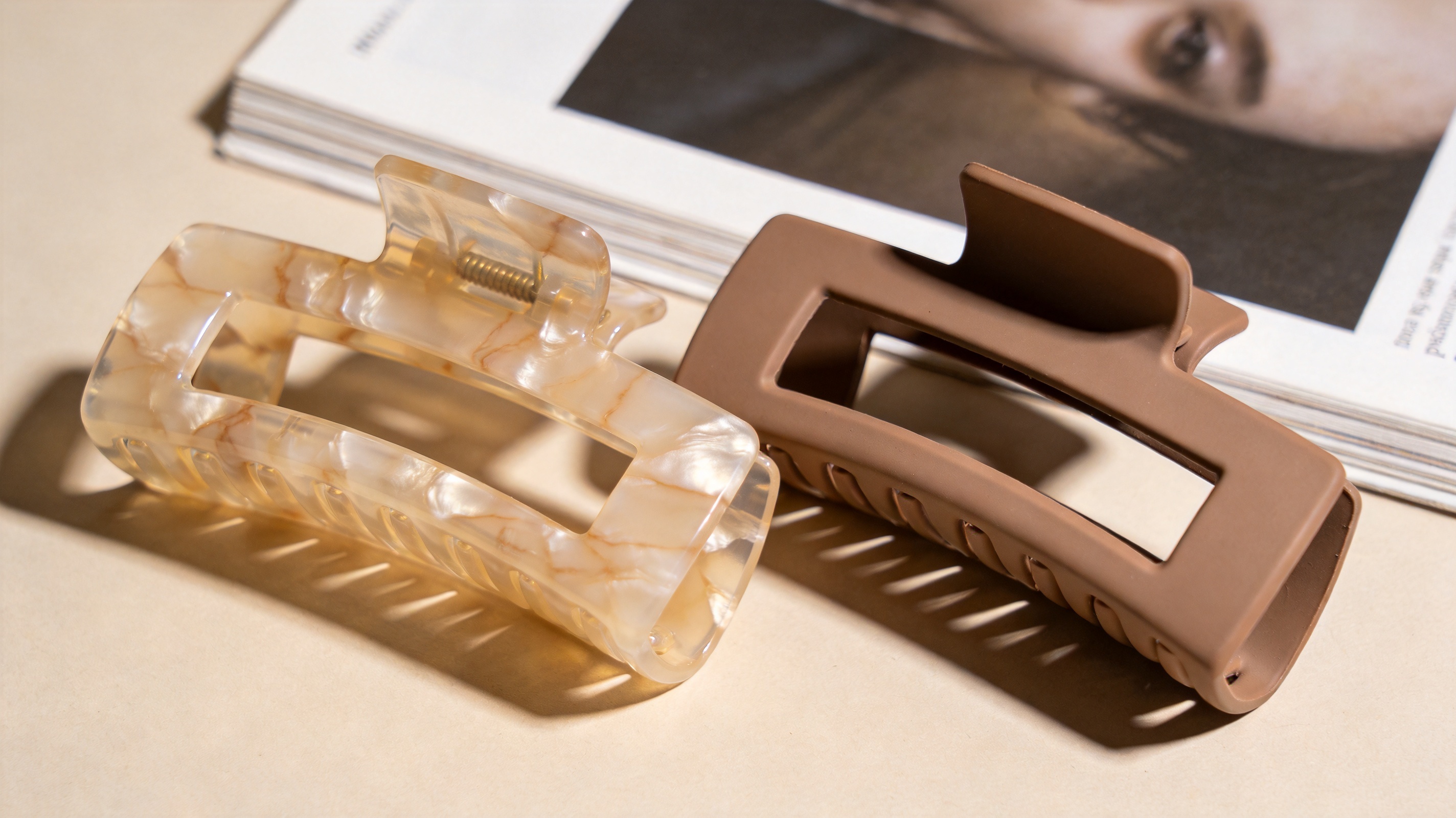
When I first started advising hair accessory brands on product sourcing, I noticed a common misconception: many founders assumed that choosing between acetate and plastic was simply a matter of budget. In my experience, it is far more nuanced than that. The material you choose for your hair clip line is a strategic decision that shapes your brand’s identity, pricing power, and retail relationships. When buyers walk a trade show aisle or scroll through a wholesale catalog, they are not just looking at shapes and colors; they are evaluating quality signals, durability expectations, and the story your product tells about your brand.
Retail buyers are trained to assess material quality within seconds. A clip that feels flimsy or looks cheap will immediately be categorized as a low-margin impulse item. In contrast, a well-crafted acetate hair clip signals premium craftsmanship and justifies a higher price point. Your material choice directly determines which retail tier you can approach—from drugstore shelves to boutique beauty counters.
Perceived value is driven by tactile and visual cues. Acetate offers a depth of color and a smooth, warm feel that consumers associate with luxury. Plastic, while versatile, often reads as more utilitarian. This perception gap translates directly into pricing: premium acetate clips can command 2–3 times the wholesale price of standard plastic alternatives, giving you healthier margins and more room for brand investment.
Acetate is a plant-based plastic derived from wood pulp and cotton fibers. It is the same material used in high-end eyewear frames, which speaks to its reputation for quality and longevity. Acetate is naturally flexible yet resilient. It can withstand repeated bending without cracking, making it ideal for hair clips for women that endure daily use. Unlike many plastics, acetate does not become brittle over time, and it can be polished to a high gloss that resists scratching. This durability means fewer returns and higher customer satisfaction for your retail partners.
One of acetate’s standout features is its translucency and color depth. Because the color runs through the entire material—not just a surface coating—acetate clips offer a rich, layered aesthetic that mimics tortoiseshell, marble, and subtle gradient effects. This visual complexity is difficult to replicate with standard plastic and gives your product line a distinctive, upscale appearance.
Plastic is a broad category, and not all plastics are created equal. Understanding the specific polymers used in hair clips is essential for making informed sourcing decisions. The most common plastics in hair accessories are ABS (acrylonitrile butadiene styrene), polypropylene, and polystyrene. ABS is favored for its toughness and impact resistance, while polypropylene offers flexibility and a lightweight feel. Polystyrene is cheaper but more prone to cracking. Each polymer brings different trade-offs in cost, durability, and finish quality.
Standard plastic clips are generally lighter than acetate, which can be an advantage for small or delicate designs. However, lighter weight often comes with reduced structural integrity. Thin plastic clips are prone to snapping at the hinge or stress points, especially in colder temperatures. For brands targeting high-volume, low-price markets, plastic remains a viable option, but you must be prepared for higher breakage rates and potential customer complaints.
When evaluating acetate versus plastic for your hair accessories line, several factors deserve close attention. Acetate offers a premium, handcrafted look that is difficult to achieve with plastic. Its natural variations in color and pattern mean that no two clips are exactly identical—a feature that appeals to consumers seeking unique pieces. Plastic, by contrast, offers uniformity and consistency, which can be an advantage for mass-market branding but lacks the artisanal appeal that drives higher price points. For a deeper dive into material properties, consult this industry reference on acetate applications.
Acetate clips tend to have smoother edges and a more comfortable grip, reducing pressure points during extended wear. Plastic clips, especially those with sharp mold seams, can cause discomfort or hair snagging. For brands that prioritize customer experience and repeat purchases, acetate’s wearability is a significant selling point.
There is no avoiding the cost gap. Acetate is more expensive per unit, and manufacturing it requires higher minimum order quantities due to the complexity of the material processing. Plastic, on the other hand, offers lower unit costs and more flexible MOQs, making it accessible for startups or brands testing new designs. Your choice here depends on your cash flow, inventory strategy, and willingness to invest in a premium positioning.
Your target market should dictate your material strategy, not the other way around. If you are selling into high-end boutiques, department stores, or specialty beauty retailers, acetate is the clear choice. These channels expect premium materials and are willing to pay for them. If your focus is on mass-market retailers, drugstores, or promotional giveaways, plastic offers the cost efficiency you need to compete on price.
Modern consumers are increasingly scrutinizing the environmental impact of their purchases. Acetate, being plant-based and biodegradable under certain conditions, holds a sustainability advantage over petroleum-based plastics. If your brand targets eco-conscious demographics, acetate gives you a credible story to tell—one that can justify premium pricing and build brand loyalty. For a technical reference on biodegradable material properties, explore the latest research.
Working with overseas suppliers requires rigorous quality control, regardless of your material choice. Not all acetate is created equal. Some suppliers use recycled or lower-grade acetate that can have inconsistent color or structural weaknesses. Request material certifications and samples from multiple production batches before committing. For plastic, verify that the polymer grade meets your specifications for flexibility and impact resistance.
Implement a testing protocol that includes snap resistance, hinge durability, and surface inspection for bubbles, scratches, or mold lines. For acetate, also check for color consistency across batches. A simple bend test can reveal whether a clip will survive real-world use or fail within weeks—saving you from costly returns and damaged retail relationships.
You do not have to choose one material exclusively. Many successful brands launch mixed-material collections to capture multiple market segments. Plan your SKU structure to balance premium acetate pieces with volume-driven plastic items. Use acetate for signature designs and limited editions, while plastic covers your entry-level price points. This approach allows you to test consumer response to acetate without overcommitting your inventory budget.
Market your acetate line as “luxury,” “artisan,” or “eco-conscious” to justify the higher price. For plastic lines, emphasize “everyday essentials,” “trend-forward colors,” or “value packs.” Distinct marketing angles prevent cannibalization between the two lines and help retailers understand where each product fits in their assortment.
Yes, acetate clips can be customized through laser engraving, metal plate attachments, or debossing. However, the process is more delicate than with plastic, and you should work with suppliers experienced in acetate finishing to avoid surface damage.
Acetate is generally more stable in varying temperatures, while some plastics can become brittle in cold conditions or warp in heat. Both materials are lightweight, but acetate’s slightly higher weight can affect shipping costs for large orders. Store both in a cool, dry environment to maintain structural integrity and surface finish.
Choosing between acetate and plastic hair clips is not about which material is “better” in absolute terms—it is about which material better serves your brand’s positioning, target customer, and financial goals. Acetate offers premium aesthetics, durability, and a compelling sustainability story, while plastic provides cost efficiency and flexibility for high-volume markets. By understanding the strengths and limitations of each, you can build a hair accessories line that resonates with buyers, delights end consumers, and drives sustainable growth for your brand.