
How to Choose the Right Hair Claw Clips Wholesale: A Buyer’s Guide for Retailers and Salons
The humble claw clip has undergone a remarkable transformation. Once relegated to gym bags and lazy weekends, these versatile hair accessories have become a fashion-forward staple, dominating social media feeds and retail shelves alike. For retailers and salon owners, this surge in popularity represents a significant revenue opportunity. However, navigating the world of hair claw clips wholesale requires more than just picking the prettiest designs. This buyer’s guide will walk you through the essential factors—from material quality to supplier selection—to ensure you stock products that sell, satisfy, and sustain healthy profit margins.
1. Why Hair Claw Clips Are a Must-Stock Wholesale Item
Current Demand Trends for Claw Clips
The claw clip market is experiencing a sustained boom. What began as a Y2K nostalgia trend has solidified into a mainstream styling essential. Consumers are drawn to claw clips for their ease of use, ability to reduce heat damage, and their capacity to elevate both casual and professional looks. This demand is not a fleeting fad; it reflects a broader shift toward comfortable, functional, and stylish hair accessories. For B2B buyers, this means a consistent, year-round sales opportunity that peaks during back-to-school, holiday, and summer seasons.
Profit Margins and Retail Price Points
One of the most compelling reasons to invest in claw clips is their exceptional profitability. The cost per unit at wholesale is remarkably low, yet the perceived value allows for significant markups. A high-quality acetate clip that costs a few dollars wholesale can easily retail for $12 to $20, especially when positioned as a premium, salon-grade accessory. Even standard plastic clips offer healthy margins at lower price points, making them excellent impulse buys at checkout counters. This favorable cost-to-retail ratio makes hair claw clips wholesale a low-risk, high-reward inventory addition.
2. Key Specifications to Evaluate Before Ordering Hair Claw Clips Wholesale
Material Quality: Acetate vs. Plastic vs. Metal
The material you choose defines your product’s quality and price point. **Acetate** is the premium choice—a plant-based plastic that offers a rich, glossy finish, vibrant colors, and a durable, slightly weighty feel. It is gentle on hair and resists cracking. **Standard plastic** (often ABS or resin) is more economical and lightweight, ideal for trend-driven, budget-friendly lines, but it can look and feel cheaper. **Metal** clips offer a sleek, minimalist aesthetic and strong hold, but they can be heavy and may snag hair if not finished smoothly. For a balanced inventory, we recommend leading with acetate for your core line and supplementing with plastic for seasonal trends.
Size, Grip Strength, and Hair Type Compatibility
A claw clip is only as good as its hold. Consider the size range you offer: small clips (2-3 inches) for fine hair or half-up styles, medium clips (3.5-4 inches) for standard hair thickness, and large or extra-large clips (4.5+ inches) for thick, curly, or long hair. Grip strength is equally critical. Test the spring tension—a clip that is too loose will slide out, while one that is too tight can cause headaches or hair breakage. Ensure the teeth are smooth and rounded to prevent snagging. Offering a variety of sizes ensures you cater to all hair types and customer needs.
Finish, Colorfastness, and Durability Standards
The finish is the first thing a customer notices. Look for a high-gloss polish without visible seams, bubbles, or rough edges. Colorfastness is non-negotiable; colors should not fade or bleed when exposed to hair products, sweat, or sunlight. Durability involves the hinge mechanism—it should open and close smoothly thousands of times without snapping. Request samples to test these factors personally. A clip that breaks after a few uses will result in returns and damage your brand’s reputation.
3. Choosing the Right Styles and Designs for Your Target Market
Classic vs. Trend-Driven Claw Clip Designs
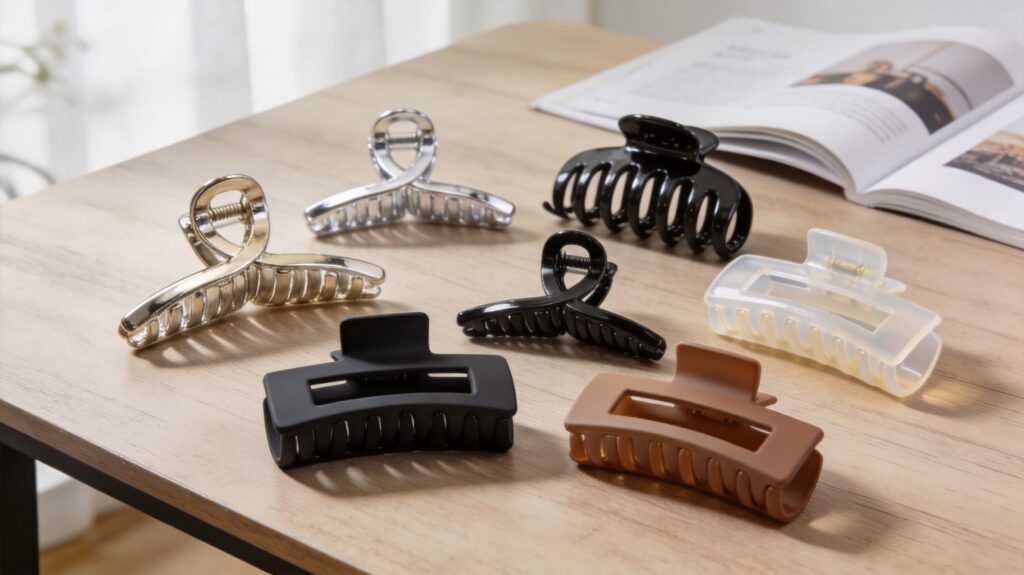
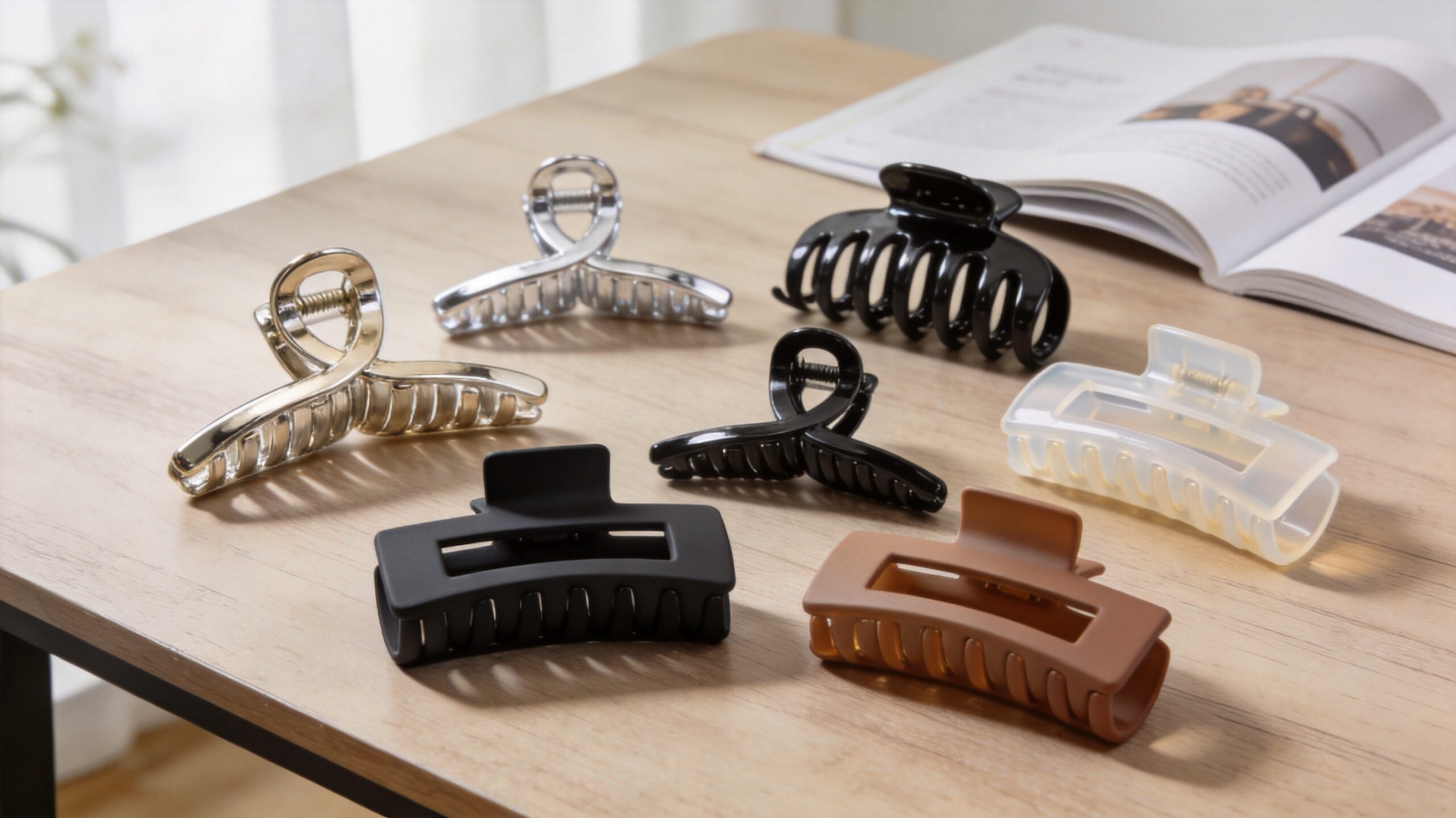
Your design selection should balance timeless staples with current trends. Classic shapes—like the traditional rounded jaw clip and the minimalist French barrette style—are reliable sellers. Trend-driven designs, such as the curved “banana” clip, pearl-embellished pieces, or tortoiseshell patterns, capture attention and drive impulse purchases. Monitor social media and fashion week coverage to anticipate which styles are gaining momentum, and be prepared to pivot your wholesale orders accordingly.
Color Palettes and Seasonal Assortments
Color is a powerful purchasing driver. Neutral tones (black, brown, beige, tortoise) are the bread-and-butter of any collection, offering versatility for daily wear. However, seasonal palettes create urgency. Offer pastel and clear “jelly” colors for spring/summer, and rich jewel tones, deep burgundies, or matte black for autumn/winter. A well-curated assortment that mixes neutrals with seasonal pops will appeal to a broader customer base and encourage multiple purchases.
Packaging Options That Boost Shelf Appeal
In a retail environment, packaging is your silent salesperson. For self-serve retail, consider hang tags, carded backs, or clear poly bags with a branded sticker. For salons, consider offering clips in small display jars or countertop stands that make selection easy. Premium packaging—such as a small box or a pouch—can justify a higher price point for acetate lines. Effective packaging protects the product, communicates your brand aesthetic, and provides essential care instructions.
4. Comparing Wholesale Suppliers: Domestic vs. Overseas Sourcing
MOQ Requirements and Pricing Structures
Your choice between domestic and overseas suppliers hinges on your budget and storage capacity. Overseas suppliers, typically in China or Vietnam, offer significantly lower unit costs but often require higher Minimum Order Quantities (MOQs), sometimes 500-1000+ pieces per design. Domestic wholesalers offer the advantage of lower MOQs, faster shipping, and easier communication, but at a higher per-unit price. Assess your cash flow and storage space to determine which model aligns with your business.
Lead Times, Shipping Costs, and Customs Considerations
Overseas sourcing involves longer lead times (typically 4-8 weeks for production plus 2-4 weeks for shipping) and complex logistics, including freight costs, customs clearance, and potential import duties. These factors can erode your cost savings if not carefully calculated. Domestic sourcing offers lead times of just a few days and predictable flat-rate shipping. Always request a full landed cost quote (product + freight + duties) from overseas suppliers to make an accurate comparison.
Quality Control and Sample Verification Processes
Never skip the sample stage. Before committing to a large order, request pre-production samples for every design and colorway you plan to order. Verify the material, finish, and functionality against your specifications. For overseas suppliers, consider using a third-party inspection service to check quality before shipment. Establish clear quality standards in your contract and define a process for handling defective goods to protect your investment.
5. How to Price and Position Claw Clips for Retail and Salon Sales
Bulk Pricing Strategies for Retailers
Implement a tiered pricing strategy to maximize revenue. For single clips, use a standard keystone markup (2x wholesale cost). To increase average order value, offer multi-packs—such as a set of three neutral clips or a “mix and match” bundle—at a slight discount. This encourages customers to buy more while increasing your overall profit per transaction. Use attractive price points like $9.99 or $14.99 to appeal to impulse buyers.
Bundling Claw Clips with Salon Services or Retail Displays
For salons, claw clips are a natural add-on. Offer a complimentary clip with a blowout service or create a “Styled at Home” bundle that includes a clip and a styling product. Place a curated display of clips at the styling station or checkout desk to encourage impulse purchases. For retailers, create a dedicated “Hair Accessories” endcap or a countertop spinner to increase visibility. Cross-merchandise clips with hair ties, brushes, and styling tools to create a complete destination for hair care needs.
6. Common Sourcing Pitfalls and How to Avoid Them
Inconsistent Quality Across Batches
One of the most common frustrations is receiving a second order that looks different from the first—different color saturation, weaker springs, or rougher edges. This often occurs when a supplier switches to cheaper materials to maintain margins. To mitigate this, build a relationship with a single supplier, specify your quality standards in writing, and request a new sample before every reorder. If you notice a decline, be prepared to switch suppliers.
Underestimating Inventory Turnover for Seasonal Peaks
Claw clips are highly seasonal. Demand spikes before holidays, during back-to-school, and in early summer. Under-ordering means missed sales; over-ordering means cash tied up in unsold inventory. Analyze your sales data from previous seasons to forecast demand. For overseas orders, order well in advance to account for lead times. For domestic orders, plan to place a larger initial order followed by smaller, rapid replenishment orders to stay agile.
7. Frequently Asked Questions About Hair Claw Clips Wholesale
What Is the Typical MOQ for Claw Clips?
The MOQ varies significantly by supplier. Overseas manufacturers often require a minimum of 500 to 1,000 pieces per design or color. Domestic wholesalers and distributors are more flexible, with MOQs often starting as low as 50 to 100 pieces. If you are a small boutique, look for suppliers that offer “low MOQ” options, even if the per-unit price is slightly higher.
How Do I Choose Between Acetate and Plastic Clips?
Choose **acetate** if you are targeting a premium market, want to build a brand associated with quality, and can command higher price points. Choose **plastic** if you are focused on high-volume, low-cost sales, targeting a younger demographic, or stocking trend-driven items with a short lifecycle. A balanced inventory often includes both, with acetate as the core line and plastic for seasonal experiments. For a closer look at premium options, explore our collection of elegant hair clips and shark clips to see how acetate quality translates into retail-ready products.
Can I Get Custom Branding on Wholesale Claw Clips?
Yes, custom branding is widely available. Options include debossing (stamping your logo into the material), printing on the clip’s surface, or adding a branded hang tag. Custom colors and shapes are also possible but typically require a higher MOQ and a longer production timeline. For smaller orders, branded packaging is the most cost-effective way to achieve a custom look.
—
Choosing the right hair claw clips wholesale is a strategic decision that impacts your brand, your customers, and your bottom line. By prioritizing material quality, understanding your market’s design preferences, and carefully vetting suppliers, you can build a profitable and popular hair accessory line. Remember that the best wholesale partnerships are built on clear communication, consistent quality, and a shared understanding of your business goals. With the right approach, claw clips can become a reliable revenue driver for your retail or salon business. For more insights on sourcing and product selection, consult this industry reference or this technical reference to deepen your understanding of material standards and market trends.